Leadership Transition at the German-African Business Association (Afrika-Verein) – Strategic Realignment in Response to Changing Market Conditions

Berlin – The German-African Business Association (Afrika-Verein) announces a planned change in its executive leadership. Effective 1 April 2026, the association will undergo a transition at the top in order to strategically position itself in response to evolving economic, geopolitical, and market conditions in African business.
After 14 years of successful service, the current Chief Executive Officer, Mr. Christoph Kannengießer, will step down from his role in its current form. The Presidium of the AV expressly thanks him for his outstanding commitment, strategic foresight, and defining leadership, through which he has developed the AV into a central platform for German-African economic relations.
Under his leadership, the association has strengthened its influence in politics and business, expanded its media presence, and established itself as a reliable partner for companies, institutions, and governments. His work has sustainably reinforced the AV’s position in an increasingly complex market environment.
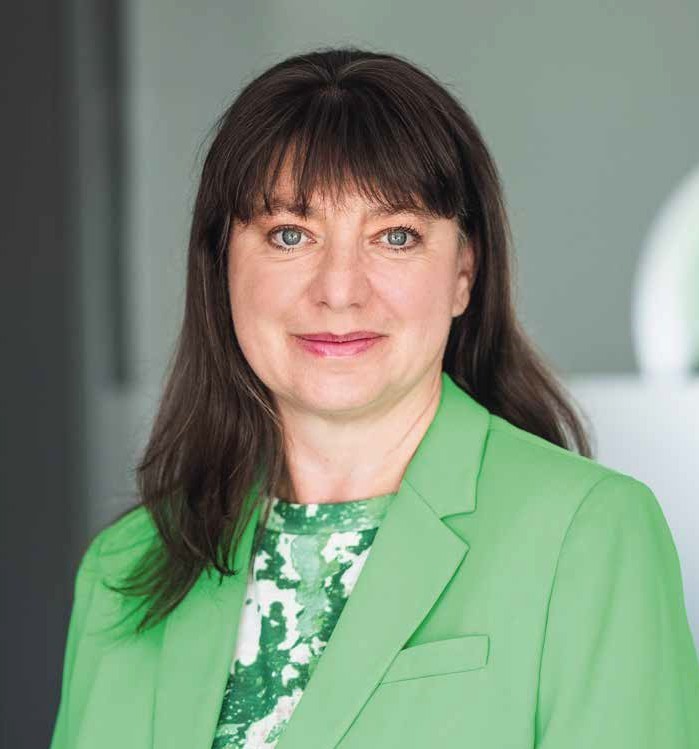
Mrs. Claudia Voß, currently Deputy CEO of the AV, will assume the role of Chief Executive Officer as of 1 April 2026. She brings extensive experience in African markets and within the association landscape and represents a forward-looking development of the AV, aligned with evolving expectations of member companies, new investment models, and the growing economic dynamism of African markets.
To ensure continuity and effective knowledge transfer, Mr. Kannengießer will remain available to the association during a transition period and will actively support the leadership handover. This will ensure that ongoing initiatives continue seamlessly and that strategic partnerships are further maintained.
The Presidium views this leadership transition as a deliberate and forward-looking step to further develop the association both structurally and strategically. The dynamism of African markets, new investment models, increasing industrialization, and changing expectations of member companies require an adaptation of structures, competencies, and strategic priorities.
Further information regarding the future organizational setup and the succession in the executive leadership will be announced by the AV in due course.
The Presidium of the German-African Business Association (Afrika-Verein)
AV Members’ Survey: German Companies Enter Africa Business in 2026 with Cautious Optimism
For 2025, respondents draw a rather subdued conclusion. 46.2% of the surveyed companies rate their Africa business as positive, 34.6% as neutral and 19.2% as negative—a clear step back compared with 2023 (positive 58.2%, negative 12.7%). Christoph Kannengießer, Chief Executive Officer of Afrika-Verein, said: “Our companies are ready to develop projects, invest and deepen partnerships. However, weak economic conditions and cost pressure are also weighing on Africa business. What is still missing is a federal government that consistently aligns its Africa policy with the competitiveness of companies on the continent, instead of a patchwork across ministries. What we need is greater speed, predictability and impact. We can see the government’s efforts to improve in this regard—but they have not yet reached companies.”
A particularly important lever for increasing direct investment lies in double taxation agreements. 36.5% of all respondents—and the large majority of companies that already invest—see the absence of DTAs as a competitive disadvantage, due to tax uncertainty, a higher overall tax burden and disadvantages in tenders. “Anyone who is serious about encouraging German investment in African markets must treat tax predictability as a key competitiveness factor,” Kannengießer added.
The visa issue is similarly fundamental: 34% see the greatest need for action in visa and migration policy. For project business, service deployments and training, reliability matters—procedures must be practical, transparent and predictable so that projects do not fail due to administrative bottlenecks.
In the markets themselves, bureaucracy/corruption and financing/access to capital hamper business success. “This is not a license for sweeping judgments; it is a mandate for action: investment conditions must be improved, and procedures must become more transparent and reliable,” said Kannengießer. And: “Reducing bureaucracy is not an African issue alone—anyone who takes competitiveness seriously must work consistently on leaner processes in Germany and internationally as well.”
Invest.EastAfrica! – Business and Investment Forum concluded with five new business partnerships to boost economic ties between Germany and East Africa
Parliamentary State Secretary to the Federal Minister for Economic Cooperation and Development, Bärbel Kofler: “The five partnerships between German and East African private sector actors and the BMZ presented today send a clear message: Germany and the EAC are driving a form of private sector cooperation that delivers economic growth while creating tangible benefits for people. The BMZ will continue its close collaboration with the East African Community to strengthen regional integration and improve reliable investment framework conditions.”
Over the course of the forum, more than 350 representatives of German companies met a delegation of 60 East African businesses across a three-day programme in Frankfurt am Main and Berlin. Participants explored concrete cooperation opportunities in joint investment priority areas, such as agri-business, pharmaceuticals, AI, carbon credits as well as tourism.
East Africa is fast consolidating its positions as Africa’s economic powerhouse with inter-regional trade expanding by more than 12 percent. At the same time, the East African Community is reviving their efforts to finalise the EAC-EU Economic Partnership Agreement—a timely step, given that the EU currently ranks only as the region’s fourth-largest trading partner. Against this backdrop, the forum—hosted in the State of Hesse, one of Germany’s economic powerhouses—aimed to deepen German-East African economic ties and diversify both regions trade and investment portfolios in an era of mounting geopolitical challenges.
“At a time when the world is once again turning to isolation, we are sending a clear signal for open trade and the diversification of our economic relations. East Africa, with its more than 320 million inhabitants, is an important future market for Hessian companies—dynamic, innovation-strong and strategically relevant,” says Manfred Pentz, Hessian State Minister for International Affairs.
In the same spirit—moving from political intent to practical delivery—Christoph Kannengießer, CEO of the German-African Business Association Afrika-Verein, emphasizes: “Invest.EastAfrica! shows how purposeful dialogue can translate into concrete cooperation. Over three days, companies moved from initial interest to structured project pipelines—agreeing next steps and timelines on a foundation of trust. Diversifying markets is a shared strategic objective, and this forum helps turn it into practical, investable collaboration.”
Building on the momentum of the first edition, the event partners— including Afrika-Verein, the State of Hesse, German Development Cooperation (GIZ), IHK Frankfurt & Friedberg and Berlin, BVWM, as well as the East African Community and the East African Business Council (EABC) — will support the development of ten additional business cooperations to be launched at next year’s forum. These projects are expected to target an estimated 500 million EUR in investment volume and involve German companies such as Deutsche Bank, Commerzbank, ODDO Bank, Lufthansa, Fresenius alongside their East African partners such as Cassava, Bedi Investment, Hormuud and Equatorial Nuts. “As business community of East African we are welcoming the rich results of the business forum and are ready to implement these agreed cooperation projects and more to boost economic ties with Germany.”, concluded Jaswinder Bedi, Vice-President of the East African Business Council.
About Invest.EastAfrica!
Invest.EastAfrica! is the German-East African Business & Investment Forum, convening companies and decision-makers to advance concrete cooperation between Germany and the East African Community (EAC). The inaugural forum took place from 27-29 January 2026 in Frankfurt am Main and Berlin.
Contact person: Martin Rambach (+49 170 3711310)
BMZ Reform Plan: The right direction — but without funding and speed, the economic agenda remains just a promise
“Development policy has long been geo-economics. But anyone who wants to be strategic must deliver economically — not just put words on paper. Without instruments and a timeline, it remains a set of well-intentioned announcements,” says Claudia Voß, Deputy Managing Director of the Afrika-Verein der deutschen Wirtschaft.
“In terms of economic cooperation, the reform plan addresses relevant levers. Companies are to be involved earlier in designing projects, and dialogue with the private sector is to be intensified. We are already seeing initial dialogue formats as concrete steps in the right direction. But when it comes to key objectives such as expanding financing and de-risking instruments, or removing structural barriers in development-cooperation tenders, the reform plan unfortunately remains far too vague,” Voß adds.
“Which obstacles will actually be removed — and by when? Which procurement rules will change in measurable ways so that small and medium-sized enterprises are not only invited, but enabled to participate? Where are the deadlines, budgets, instruments — and a project pipeline that provides planning certainty? Germany’s SME sector needs reliability: faster procedures, clear points of contact, risk mitigation, and predictable financing. And ideally not only in 2027, when implementation of the reform decisions is supposed to be completed,” Voß says.
Similar concerns apply to the Compact with Africa (CwA). A strengthening of the initiative is announced, but what concrete offerings and investment formats will follow remains unclear. There is also no visible expansion logic that systematically includes the continent’s economic heavyweights. “Nigeria and Angola should have been on the agenda for a long time,” Voß says.
“Achieving a ‘level playing field’ for Germany’s SME sector is still a very long way off. Other ministries also need to deliver. Against that backdrop, it is surprising that the Federal Ministry for Economic Affairs and Energy (BMWE) is not explicitly mentioned in the cross-ministerial approach,” Voß notes.
BMZ Action Plan Sets the Right Priorities – Tangible Results Must Now Follow
At the same time, Afrika-Verein calls for a swift concretization and consistent implementation of the announced measures. CEO Christoph Kannengiesser emphasizes: “Many elements of the Action Plan – such as a stronger linkage between development policy activities and projects by German companies in Africa, or the creation of fair opportunities for European, particularly German, suppliers in tenders – should have been implemented long ago. The fundamental ambition is right, but without visible results, it remains ineffective.”
“The business community now expects concrete progress: competitive financing and guarantee instruments, realistic risk mitigation, and faster procedures to make investments in Africa truly feasible. More pragmatism is also needed in the area of skilled labor mobility – for example, through faster visa processes, easier recognition of qualifications, and joint training initiatives. This is not a wish list,” says Kannengiesser, “but a prerequisite for growth and competitiveness – in Africa and in Germany.”
G20 Finance Ministers’ Meeting in Durban: Afrika-Verein Calls for New Approach in Relations with Africa

Your Contact Person

Martin Rambach
Manager Public Affairs/PR
T +49 30 2060719 54
rambach@afrikaverein.de
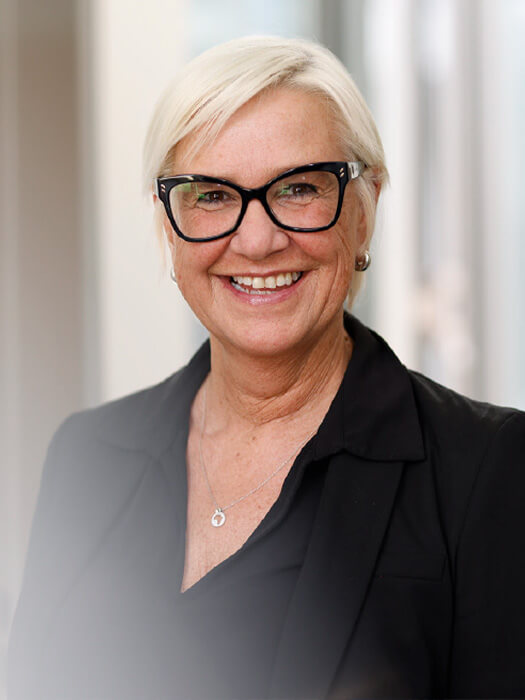
Press Photo Sabine Dall'Omo

Chairperson
The photo is available for download and can be used freely provided the copyright is stated.
© Afrika-Verein